A Guide to Organizing a Comic Book Collection for Growth
Organizing a comic book collection seems like it should be easy. Alphabetical order. Problem solved.
At least, that's what I thought.
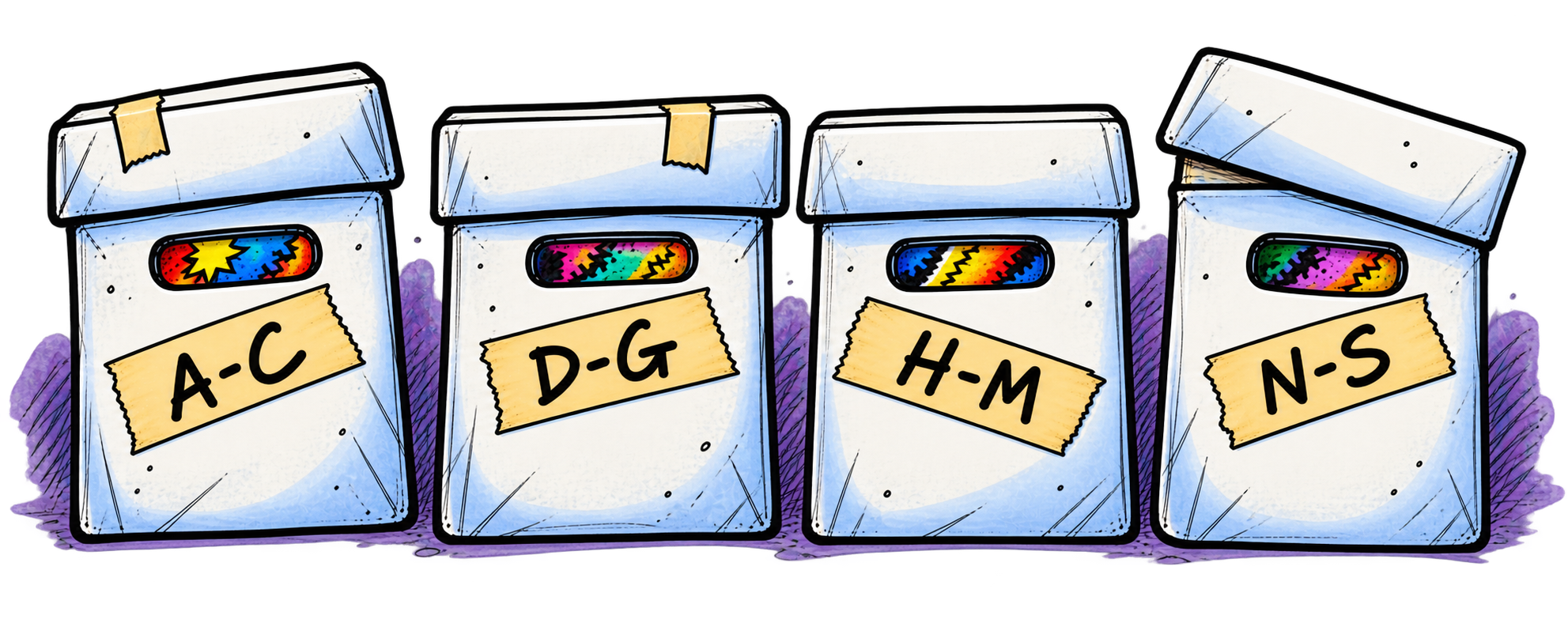
I've been organizing my comic collection, and my natural inclination has always been to arrange everything alphabetically. But comics have a way of turning even something as simple as the alphabet into an argument.
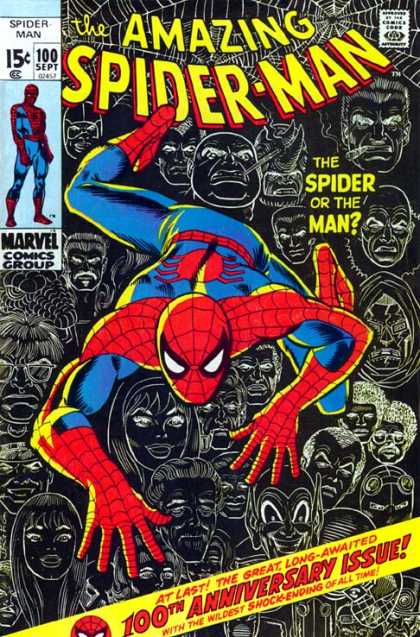
Consider The Amazing Spider-Man.
Ignoring the word "The," as you normally would when alphabetizing a title, The Amazing Spider-Man belongs under A. But part of my collector brain immediately objects.
Shouldn't Amazing Spider-Man be with the other Spider-Man comics?
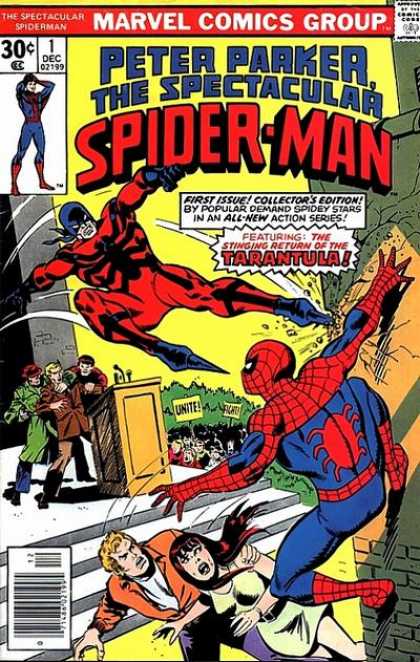
It would seem perfectly reasonable to file it as Spider-Man, Amazing. Then Spectacular Spider-Man could become Spider-Man, Spectacular, Sensational Spider-Man becomes Spider-Man, Sensational, and so forth.
Now all my Spider-Man comics are together.
Neat. Logical. Problem solved.
Except I think I just made the problem worse.
When Alphabetical Isn't Really Alphabetical
Once I decided that Amazing Spider-Man could become Spider-Man, Amazing, I had created a rule.
And rules have consequences.
What about Friendly Neighborhood Spider-Man? Presumably that becomes Spider-Man, Friendly Neighborhood.
Superior Spider-Man? Spider-Man, Superior.
Ultimate Spider-Man? Spider-Man, Ultimate.
Okay. Still manageable.
Then there's Web of Spider-Man.
Does that become Spider-Man, Web of?
What about Peter Parker: Spider-Man? Spider-Man 2099? Spider-Man Unlimited?
At some point, I'm no longer alphabetizing comic books. I'm creating my own taxonomy for them.
And Spider-Man is actually an easy example.
The Franchise Method
There's an appealing philosophy behind grouping comics this way: organize everything by character or franchise.
All the Batman comics go together. All the Superman comics go together. All the Spider-Man comics go together. For browsing a favorite character, this sounds fantastic.
But where do I put Action Comics?
Under Superman?
Superman is certainly the character most closely associated with Action Comics, but Action Comics is also a series with an identity and history of its own. Even though Superman was introduced in issue #1, he wasn't its only feature. In the 1980s, DC made Action Comics a weekly anthology that didn't always include a Superman story.
The same problem applies to Detective Comics.
Today, Batman and Detective Comics are practically inseparable. But Batman didn't appear until issue #27. Does that mean issues #1–26 belong under D while everything afterward goes under Batman?
Obviously not.
So maybe the entire series goes under Batman. But now I've made another rule.
And then I find Tales of Suspense.
Uh-oh!
Should Tales of Suspense be filed with Iron Man?
That makes sense for a substantial part of its run. But Captain America shared the book with Iron Man. Before either character appeared, Tales of Suspense was an anthology title. So is it an Iron Man comic, a Captain America comic, or simply Tales of Suspense?
Similar problems appear with Journey into Mystery, Strange Tales, Showcase, The Brave and the Bold and countless other titles.
The more comics you own—and the further back into comic-book history your collection reaches — the more these exceptions pile up.
A franchise-based system doesn't eliminate organizational decisions. It requires them.
The Publisher Method
Then there's another organizational method I've encountered among collectors and comic shops: separate everything by publisher and alphabetize within those sections.
Marvel goes over here. DC goes over there. Image gets another section. Dark Horse, IDW, Dynamite and everybody else get their own areas.
Of the common approaches, this one is my least favorite. It adds an unnecessary prerequisite to finding a comic:
You have to know who published it.
That's easy enough if you're looking for Batman or Fantastic Four. Most comic collectors know that Batman is DC and Fantastic Four is Marvel.
But what about a licensed comic, like G.I. Joe?
Which section should I search?
Marvel published G.I. Joe comics. So did Devil's Due and IDW. Today, Skybound publishes G.I. Joe as part of its imprint through Image.
The same thing happens with Transformers: Marvel, Dreamwave, IDW, Skybound/Image.
Star Wars spent years at Marvel, moved to Dark Horse for decades, and eventually returned to Marvel.
A publisher-based system requires me to know not merely what comic I'm looking for, but which company held the license when that particular comic was published.
That's useful information for a collector to know, but it's terrible information to require simply to find a comic in a box.
The Real Problem Is Mental Friction
This is what ultimately changed my thinking.
None of these questions are particularly difficult.
I can decide whether Tales of Suspense belongs with Iron Man. I can look up who published a particular Transformers series. I can develop a perfectly consistent rule for where Web of Spider-Man belongs.
But why should I have to?
Every special rule adds a tiny decision.
When I'm putting away one comic, that's nothing. When I'm organizing thousands of comics, those tiny decisions accumulate. Worse, I have to remember those decisions later.
Did I put Tales of Suspense with Iron Man?
Did I put Web of Spider-Man under W or Spider-Man?
Did I separate my IDW Transformers comics from the Marvel ones?
A good organizational system should reduce those questions, not create them. That's when the boring solution started looking awfully attractive.
Just Sort Them Like a Library
The system I've settled on is almost embarrassingly simple.
Just use the actual published title.
Ignore leading articles — A, An, and The — and otherwise let the alphabet do its job.
So:
Action Comics goes under A.
The Amazing Spider-Man goes under A.
Batman goes under B.
Detective Comics goes under D.
G.I. Joe goes under G.
The Incredible Hulk goes under I.
The Spectacular Spider-Man goes under S.
Tales of Suspense goes under T.
The Uncanny X-Men goes under U.
Web of Spider-Man goes under W.
There's no need to know the publisher, determine the primary character, or decide which franchise owns an anthology title.
You just need to know the name of the comic.
But My Spider-Man Comics Are Everywhere!
This is the obvious argument against this sorting method:
If I'm looking for Spider-Man comics, they're scattered across the collection.
Amazing Spider-Man is under A. Friendly Neighborhood Spider-Man is under F. Peter Parker: Spider-Man is under P. Spectacular Spider-Man is under S. Ultimate Spider-Man is under U. Web of Spider-Man is under W.
Initially, I agreed with this argument against pure alphabetization and leaned into the franchise method. But as a I became a convert to the ABC method, I came to see this "bug" as a feature.
The Joy of Finding Something You Weren't Looking For
One of the pleasures of visiting an old bookstore, record shop, video store or comic shop is finding something unexpected while looking for something else. It even has a name: serendipitous discovery.
You head into the stacks looking for one title and notice another one sitting nearby.
"Wait. What's that?"
Twenty minutes later you've completely forgotten what you originally came looking for.
A purely alphabetical comic collection creates some of that same serendipity.
Looking for Amazing Spider-Man means browsing past other titles beginning with "Amazing."
Looking for Detective Comics might take me past Destroyer Duck, Devil Dinosaur, Dreadstar, or some other book I haven't thought about in years.
"Oh, man. I forgot I had this."
If every Spider-Man comic lives in one enormous Spider-Man neighborhood, I go directly to Spider-Man, find the comic, and bounce.
Alphabetical filing makes the major characters mingle with everybody else.
Spider-Man doesn't get a gated community.
I rather like that.
A disadvantage of the library method turns out to encourage one of the things I enjoy most about having a physical collection: browsing the collection itself.
Let the Database Be Smart and the Boxes Be Dumb
There's another reason I don't think the physical collection needs to encode all these relationships.
That's what a database is for.
A physical comic can only occupy one place in a filing system.
Tales of Suspense can't simultaneously sit under T, Iron Man and Captain America.
But in a database, it absolutely can.
A database can tell me:
every comic featuring Spider-Man;
every Batman title I own;
every G.I. Joe comic regardless of publisher;
every Marvel comic from 1977;
every appearance of Iron Man;
every anthology title in the collection;
or every issue I'm missing from a particular run.
The database can understand characters, publishers, franchises, dates, creators, series and relationships.
The long box doesn't need to.
The long box really only has to answer one question:
Where is the comic?
Keeping that distinction in mind makes the physical filing system much easier.
Let the database be smart.
Let the boxes be dumb.
The Future-Me Test
There's one other advantage that may matter more as the years go by.
Will I understand my own organizational decisions twenty years from now?
Maybe I'll remember that I decided Tales of Suspense belongs with Iron Man.
Maybe I won't.
Maybe I'll remember whether I considered Web of Spider-Man a Spider-Man title for filing purposes.
Maybe I won't.
But I'll probably still know the alphabet.
If I'm holding a copy of Tales of Suspense, I don't have to remember a decision I made decades earlier.
Tales.
T.
Done.
There's something reassuring about an organizational system that doesn't require remembering the organizational system.
My Comic Filing Rules
So, for now at least, my rules are deliberately boring:
Alphabetize by the published series title.
Ignore A, An, and The when they appear at the beginning of a title.
Don't reorganize titles around characters or franchises.
Don't separate comics by publisher.
Avoid special filing rules unless they're absolutely necessary.
Let the collection database handle relationships, searching and filtering.
I'm sure comics will eventually throw some wonderfully bizarre edge case at me that forces me to reconsider one of those rules. Comics are good at that.
But that's also part of the point.
The goal isn't to create a filing system with a rule for every possible situation.
It's to create one that needs as few rules as possible.
Trust the Alphabet
I started thinking about all of this because I wanted to improve alphabetical sorting.
Surely putting all my Spider-Man comics together would be better. Surely grouping related characters would make the collection easier to navigate. Surely there was some clever collector's system that would make everything fit together perfectly.
But every improvement required another rule.
And every new rule produced another exception.
Eventually I realized I was solving the wrong problem.
The best organizational system isn't necessarily the one that puts every related thing together.
It's the one that lets me consistently predict where something will be.
For my collection, I think librarians had the right idea all along.
Use the title. Trust the alphabet. Let the database worry about everything else.
And if searching for The Spectacular Spider-Man leads me to some weird forgotten comic sitting three dividers away?
That's not a bug.
That's half the fun of having a comic collection in the first place.